Hosted at ACCIONA Construction and facilitated by PNO Innovation Belgium and PNO Innovation (Spain), the workshop was a resounding success with over 100 participants attending both online and in person.
The event showcased key highlights that underscored the advancements and future direction of the offshore energy sector. Participants gained valuable insights from professionals on evolving landscape and opportunities within the future of the offshore energy market.
Expert presentations on cutting-edge innovations in durable and sustainable materials, highlighted their role in advancing on offshore infrastructures. Additionally, the event showcased solutions designed to align with the EU’s 2050 climate neutrality goals, driving progress in offshore sustainability.
Explore the final results of the project:What motivated you to join the project, and what is your role?
EDF is an emerging player in the renewable energy sector and an international actor in energy production. Our R&D team supports the production teams with the aim of continues improvement and staying at the forefront of our field, ensuring our contribution to numerous European projects.
Within the MAREWIND project, EDF is contributing in the cost evaluation of the developed technologies where we can apply our internal cost models and validate it in our facilities. Additionally, we are supporting in the testing of corrosion and anti-fouling coatings as well as the definition of the life cost analysis.
But that’s not all; as experts in wind energy, we are also assisting in the definition of the innovations and the simulation of the 13 meters blade produced by EireComposites.
As world leading electricity company covering all electricity-based activities, how is EDF actively contributing to achieving the European renewable energy targets?
As a major player in the world’s energy transition, EDF is actively contributing to achieving European renewable targets. By 2030, our goal is to reach 60 GW net by increasing by more than 70% the share of renewable energy alongside nuclear energy.
Focusing on wind energy, our company pays a pivotal role in global onshore wind power production, emphasising high-quality projects and advanced technologies. Moreover, EDF participates in developing major offshore wind projects across Europe, Asia, and North America, supporting the growth of this sector and creating new jobs.
Thus, EDF has aligned its ambitions with the Paris Agreement setting greenhouse gas reduction targets by 2030. In this context, the company aims to reduce its carbon intensity and contribute to carbon neutrality by 2050.
In summary, EDF is committed to diversifying its energy sources, investing in renewables, and progressing toward a sustainable and cleaner energy future.
The technologies developed by the MAREWIND project will undergo testing at various demonstration sites. Could you elaborate on the specific test planned for implementation at your offshore wind farms?
The three frames embedding coupons with anticorrosion and antifouling coatings, made by Lurederra, have been installed at our wind farm in Teesside. The frames were installed in different exposures: wet zone, atmospheric and intermediate conditions.
From now until the end of the project, we have scheduled at least two inspections to evaluate the effectiveness of the new coatings.
Furthermore, other anti-fouling coatings are being tested in the Mediterranean waters at the “Observatoire Océanologique de Banyuls-sur-Mer”.
How does EDF play a role in analysing the results obtained from corrosion, biofouling, UHPC, blades, recycling and SHM initiatives?
In most tasks, our role is supportive and advisory. We are pleased to provide reviews for intermediate and final documents, drawing on our extensive experience.
How do you see the future of the MAREWIND project?
Our vision for the MAREWIND project is that it will play a pivotal role in advancing various aspects of the offshore wind industry, particularly in areas such as O&M cost reduction though enhanced component durability and SHM systems; capital cost reduction with new coatings and new concrete material requiring less reinforcement; technologies enabling future lifetime extension; and sustainability.
READ MORE ABOUT EDF HERE.
Why did you join the MAREWIND project and what’s your role?
Acciona, and in particular the Technological innovation department of Acciona Construction company, joined the project due to the exceptional opportunity for developing new and promising materials that will enhance offshore infrastructure durability, one of the Company’s markets.
Our role in the project is the development of Ultra-High Performance Concrete (UHPC) for floating slabs on offshore windmills within task 2.4, of which we were leaders. Additionally, we have also prepared different demonstrators to check both UHPC durability and the performance of optic sensors developed by CETMA embedded in UHPC floating prototype.
By the end of the project, Acciona is also organising a workshop for the project dissemination.
As specialist in the development, construction and O&M of wind farms, how is ACCIONA contributing to the European renewable energy targets?
Acciona is composed by different business such as, Construction, Engineering, Water and Energy, among others. All of them cover different sectors and provide different solutions for improving the welfare of society. ACCIONA invests in, develops and operates infrastructure assets that make our planet more sustainable.
Our Sustainability Master Plan 2025 aims to make us a recognised leader in developing basic infrastructure assets with additional value for people and the planet, in short, regenerative infrastructure. Those working guidelines are focused on reducing the impact of all business performance contributing to fulfill European renewable energy and sustainability targets.
Durability, fresh, and mechanical requirements are crucial for concrete in offshore structures. Could you explain the specific requirements and standards that UHPFRC/HPFRC concretes must meet to ensure a long service life in this context?
Concrete materials designed for offshore applications must follow the standard EN 206-1 (2021), fulfilling the minimum requirements for the exposure class XS3. The strength usually used until now in some of company’s applications is a C60 concrete.
The UHPC developed in the project will enhance concrete properties currently used concretes.
Can you describe your involvement in the synthesis of new concrete materials like UHPRC?
Acciona staff involved in the project are experts in concrete materials. So, we designed the UHPC (and HPFRC) for the beginning, with the characterisation of different raw materials to the selection of the most suitable ones to get the optimum final UHP concrete. The design was also focused to achieve more sustainable concretes compared to the actual UHPC solution. In this sense, the mix design selected has a up to 24% less cement content than a standard UHPC formulation.
Could you explain the process of preparing, developing, and testing such a prototype? What are the key performance indicators you look for during these tests?
The project designated the prototype for this materials as a floating beam. For a more interesting demonstrator it was tried to select a section of a real offshore windmill floater, but due to the complexity of the scaling to fit the prototype dimensions on the test site (EUMER) facilities, it was finally kept as a beam. Dimensions were recalculated to get a floating prototype.
Manufacturing present different challenges, being the most problematic one, the pressure that this concrete exerted on the formwork and interior reinforcement core. To prevent the problems arise in the manufacturing of the first prototype, additional fixation systems were implemented in the second demonstrator formwork. The Key performance indicator (KPI) looked during the tests are related to durability improvement of concrete materials (KPI2), reduction of operation and maintenance costs (KPI 6), reduction of the environmental impact of the material and industrial production (KPI9) and increase in competitiveness and knowledge related to KPI11.
How do you ensure that the concrete materials you work with meet or exceed the mechanical and durability requirements, considering the harsh conditions of offshore environments?
Concrete characterisation carried out during the concrete mix design at lab scale exceed the mechanical requirements required for the concrete mixes currently used in offshore applications. Durability test performed at lab scale also present an improvement compared to the standard concrete used in this environment (C60 class concrete).
With the samples placed in real environment at Gijón’s Harbour would monitor the real resistance to chloride intrusion of the developed UPH concrete mix. We are optimistic on the good durability performance of this material, thanks to the low porosity that presents, will ensure that the resistance to chloride penetration will be much higher than the current solution.
How do you see the future of the MAREWIND project?
From Acciona we think that this project has a promising future. At lab scale, materials developed present a very good performance and are optimistic to keep this behavior at real environment. Offshore windmill industry is raising and demanding more sustainable and durable materials to achieve EU emissions requirements and to reduce the maintenance and repair works due to the harsh condition related to offshore facilities. The materials developed in this project so, could be of great interest for the wind energy sector, but also for other offshore infrastructures.
READ MORE ABOUT ACCIONA HERE.
Main Slot Online Ala Anak Zaman Now
Dulu banyak orang membayangkan slot sebagai mesin koko188.cc di sudut ruangan yang sepi. Sekarang suasananya berubah total. Slot online hadir dengan tampilan modern, animasi halus, cerita menarik, audio yang nendang, serta peluang menang yang rasanya bikin jantung makin kencang. Bukan sekadar menarik tuas lalu menunggu keberuntungan datang. Pengalaman bermain sekarang terasa koko288.link seperti ikut petualangan lengkap dengan misi, putaran bonus, dan kejutan yang bikin betah berlama lama. Artikel ini menyajikan panduan gaya santai namun tetap fokus pada hal yang penting. Kamu akan menemukan alasan kenapa mode demo layak dicoba lebih dulu, strategi koko288.top yang membantu menjaga saldo, cara membaca informasi return to player, sampai tren fitur yang lagi ramai. Tidak ada sebutan merek. Yang ada hanya cara bermain yang lebih cerdas, lebih tenang, dan lebih nikmat koko303.bid.Suasana Slot Online Masa Kini
Slot online generasi sekarang dirancang untuk perangkat genggam. Antarmuka ramah jempol, tombol jelas, dan tempo permainan bisa disesuaikan. Tema permainan juga makin luas koko303.bz. Ada petualangan dunia kuno, dunia futuristik, kisah fantasi, hingga nuansa kasual yang penuh warna. Setiap tema menghadirkan gaya permainan berbeda sehingga pemain bisa memilih sesuai mood.- Pengalaman digital untuk ponsel, tablet, dan komputer
- Tema bervariasi yang terasa seperti serial pendek
- Fitur bonus yang memberi ritme main lebih hidup
Kenapa Mode Demo Penting
Mode demo adalah ruang latihan. Tidak perlu saldo. Tidak perlu cemas. Kamu bisa membaca pola, mengenali frekuensi fitur bonus, dan mencoba pengaturan taruhan yang nyaman. Banyak pemain koko5000.cfd berpengalaman sengaja menghabiskan waktu di mode demo untuk meraba ritme permainan. Setelah paham alur dan tempo, barulah mereka masuk ke permainan dengan saldo asli.- Pahami aturan permainan secara menyeluruh tanpa tekanan
- Uji beberapa skenario taruhan dan lihat dampaknya
- Catat kemunculan fitur bonus koko5000.link dan rasakan tempo permainan
- Bangun kepercayaan diri sebelum masuk ke permainan berbayar
Strategi Dasar Agar Main Tetap Nyaman
Slot tetap permainan yang mengandung keberuntungan haha303.top. Walau begitu, langkah sederhana bisa membuat sesi bermain jadi lebih aman dan terukur. Kuncinya adalah disiplin pada batas pribadi. Jangan sampai momen hiburan berubah jadi beban pikiran. Dengan strategi yang ringan namun konsisten, pengalaman pulsa303.link bermain akan terasa stabil dari awal sampai akhir.Atur Modal Dengan Jelas
Tentukan batas harian atau mingguan kombo88.top. Pecah modal menjadi sesi kecil yang nyaman. Misal satu sesi berdurasi singkat dengan nilai taruhan yang tidak membuat tegang. Setelah sesi selesai, berhenti sejenak. Cara ini menjaga emosi tetap netral sehingga keputusan kombo99.link tidak buru buru.Gunakan Pola Taruhan Fleksibel
Beberapa pemain suka memulai dengan taruhan kecil untuk membaca ritme. Bila permainan terasa hangat, barulah menambah nilai secara bertahap. Ada juga yang menerapkan pola sebaliknya kombo99.sbs. Intinya cari kombinasi yang membuat kamu tetap rileks. Bila mulai tegang, turunkan nilai dan nikmati putaran tanpa beban.Jangan Mengejar Kekalahan
Begitu sesi mencapai batas, akhiri walau hasil belum sesuai harapan okta188.top. Mengejar kekalahan sering berujung keputusan terburu buru. Lebih baik jeda, tarik napas, dan kembali pada waktu lain dengan kepala dingin. Sesi baru yang segar sering memberi hasil lebih baik karena pikiran jernih.Mengenal Return To Player
Return to player atau sering disingkat sebagai r t p adalah estimasi pengembalian dalam jangka panjang. Angka yang lebih tinggi berarti rata rata pengembalian yang lebih ramah pada pemain okta388.link. Walau bukan jaminan menang di setiap sesi, informasi ini berguna sebagai panduan dalam memilih permainan. Bila dua judul terasa sama seru, pilih yang memiliki r t p lebih tinggi. Saat membaca r t p, ingat bahwa angka tersebut berbicara tentang jangka panjang. Dalam sesi singkat hasilnya bisa sangat bervariasi. Oleh karena itu tetap penting menjaga ekspektasi. Nikmati perjalanan permainan dan anggap kemenangan besar sebagai bonus yang menyenangkan.Gaya Permainan Yang Lagi Ramai
Dunia slot berkembang cepat. Mekanik baru bermunculan dan membawa cara menang yang terasa segar. Beberapa gaya permainan di bawah ini banyak dibicarakan karena memberi alur yang lebih dinamis. Kamu dapat mencoba di mode demo untuk melihat mana yang paling cocok dengan selera.- Cluster pay yang memberi kemenangan saat simbol berkumpul
- Mekanik dengan jumlah cara menang yang berubah di setiap putaran
- Fitur beli yang membawa pemain langsung ke babak bonus
- Gaya tahan dan putar yang menyimpan simbol virtusplay.link selama beberapa putaran
Metode Transaksi Yang Nyaman
Kenyamanan transaksi sangat berpengaruh pada pengalaman bermain. Pilih platform yang menyediakan setoran dan penarikan cepat. E wallet memberi kemudahan. Transfer bank stabil dan jelas. Beberapa tempat menyediakan pemindaian kode melalui aplikasi pembayaran. Perhatikan juga biaya. Semakin sedikit potongan semakin baik karena kemenangan sampai ke tangan secara utuh. Waktu proses penarikan sering menjadi pembeda. Banyak pemain senang pada tempat dengan proses singkat. Rasa puas meningkat ketika kemenangan dapat dinikmati tanpa menunggu lama. Pastikan data rekening benar agar proses berjalan lancar.Mindset Yang Sehat Saat Bermain
Anggap permainan sebagai hiburan. Bila bersenang senang https://www.marewind.eu/about-marewind/ menjadi tujuan utama maka tekanan menurun. Kemenangan tetap terasa manis namun tidak menjadi beban. Dengan mindset seperti ini kamu lebih mudah berhenti ketika target terpenuhi dan tidak tergoda untuk terus memutar tanpa arah.- Tetapkan target waktu untuk setiap sesi
- Rayakan kemenangan kecil sebagai bagian dari proses
- Jaga ritme putaran agar tidak kelelahan
Mobile First Dan Kenyamanan Harian
Desain yang ramah ponsel membuat permainan bisa dinikmati di sela aktivitas. Antarmuka dibangun agar nyaman di layar kecil. Teks jelas. Tombol tidak saling berdempetan. Waktu muat singkat. Bahkan pada koneksi sedang pun permainan masih terasa mulus. Fleksibilitas ini membuat sesi bermain tidak perlu panjang. Lima menit istirahat pun cukup untuk satu sesi ringan.Pakai Data Biar Makin Cermat
Mencatat jalannya permainan membantu pengambilan keputusan. Tidak perlu rumit. Cukup tulis durasi sesi, rentang taruhan, dan kejadian penting seperti putaran gratis serta babak bonus. Setelah beberapa hari kamu akan melihat pola pribadi. Dari situ kamu bisa menata ulang strategi agar sesuai kebiasaan sendiri.- Tulis durasi sesi dan jumlah putaran
- Catat nilai taruhan terendah dan tertinggi
- Tandai momen saat bonus terbuka
- Evaluasi kenyamanan dan hasil setiap sesi
Aspek Sosial Dan Turnamen
Slot tidak selalu permainan seorang diri. Banyak tempat menyediakan turnamen berkala. Pemain saling berpacu mengumpulkan poin selama jangka waktu tertentu. Ada papan peringkat dan hadiah bersama. Suasananya hangat dan memacu adrenalin. Buat yang suka tantangan, format ini menambah semangat tanpa harus menaikkan taruhan secara berlebihan.Fitur Yang Banyak Dibicarakan
Fitur putaran gratis selalu jadi favorit karena bisa memperpanjang sesi tanpa menambah biaya. Pengganda nilai memberi sensasi tambahan saat hasil kecil berubah menjadi hadiah yang terasa berarti. Beberapa permainan juga menawarkan babak bonus interaktif yang mengajak pemain memilih jalur hadiah. Interaksi sederhana membuat layar terasa hidup dan menambah rasa penasaran di setiap putaran.Tips Singkat Memilih Judul Permainan
- Coba mode demo lebih dulu sampai ritme terasa pas
- Baca informasi r t p lalu bandingkan beberapa judul
- Pilih tema yang membuat kamu betah menatap layar
- Uji nilai taruhan yang membuat detak tetap tenang
Why did you join the MAREWIND project and what’s your role?
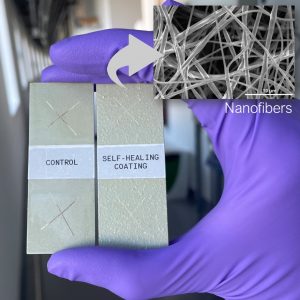
As a dedicated research institute, INL is committed to advancing environmental sustainability and engaging in project’s tackling critical issues. In this context, the development of materials capable of enhancing the longevity of offshore wind structures perfectly aligns with our institute’s research goals. At INL, we take responsibility for developing the materials with self-healing properties. Our efforts led to the development of core-shell nanofibers with self-healing properties that is triggered by a mechanical damage. This healing mechanism is autonomous, only requiring the presence of humidity.
As experts on nanoscience, how are you contributing to the European renewable energy targets?
At INL, our specialisation lies in creating cutting-edge materials customised for various applications. Our focus spans environmental catalysis for purifying water and air, along with the creation of functional coatings. Moreover, our expertise extends to the development of electrocatalysts centered around transition metals. These catalysts are designed specifically for the hydrogen evolution reaction, with the aim of presenting a viable substitute for critical raw materials.
What are the main solutions you are exploring to face challenges in the framework of offshore wind industry?
Within the MAREWIND project, our primary objective was to create a self-healing anticorrosive coating to enhance protectiveness, durability and longevity of these structures. Besides this project, we also have been working on the development of bio-friendly fluoride and biocide free solutions for UV resistance, IR reflectance, superhydrophobic, and anti-biofouling coatings for marine applications.
In the MAREWIND project, what are the main challenges when developing self-healing materials to protect theses offshore structures from corrosion?
During the project, we faced several challenges. Firstly, creating defect-free core-shell fibers while employing a water-reactive, non-conductive materials as the self-healing agent. Secondly, dispersing these core-shell fibers within the polymeric formulation to facilitate application using spray techniques.
What are the main results you have achieved/you expect to achieve as partner in the MAREWIND project?
We have successfully develop innovative self-healing materials designed to provide corrosion protection to offshore wind structures.
How do you see the future of the MAREWIND project?
By tackling key elements concerning material durability and maintenance and encompassing a range of ambitious goals, we are confident that MAREWIND will provide tangible solutions and significantly impact the materials utilised within the offshore industry.
READ MORE ABOUT INL HERE.
Why did you join the MAREWIND project and what’s your role?
EireComposites joined the project because our company’s objectives perfectly align with its goals. Specifically, we aim to use composite materials with improved functionality to reduce weight, CAPEX and O&M costs associated with composite components within the renewable wind energy industry, and minimise the environmental footprint.
Our role in the project is to manufacture and test newly formulated composites across various levels: from coupon and small-scale breadboard/demonstrator testing to the final full-scale wind blade prototype.
As a composite manufacturer, how are you contributing to the European renewable energy targets?
We are helping increase the renewable energy capacity of Europe by supplying commercial horizontal axis wind turbine (HAWT) blades. Additionally, we actively participate in R&D initiatives aimed at introducing tidal turbines, river turbines, and vertical axis wind turbines (VAWTs) to further diversify and enhance the European renewable energy market.
What are the main results/contributions you have achieved/you expect to achieve as partner in the MAREWIND project?
We have significantly reduce the risk associated with the chosen TPR resin intended for the full-scale 13-meter wind blade prototype by successfully manufacturing a 5 m long wind blade demonstrator, which is now prepared for structural testing.
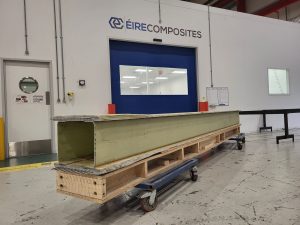
Our next steps involve the manufacturing and testing of the full-scale wind blade prototype, where we will evaluate its structural performance. This phase also includes the validation of a numerical model developed as part of the MAREWIND project.
Is EireComposites also applying similar solutions in different renewable energy sectors? If so, could you provide a few examples?
At the moment we are collaborating on other nationally funded projects which are applying similar solutions within the same sector. However, we are open to applying similar solutions for the river and tidal energy sectors on future projects.
How do you see the future of the MAREWIND project?
Upon successful completion of the MAREWIND project, we believe a follow-on European funded project will be awarded to continue the synergy developed among the highly accomplished consortium partners to help increase the TRL level of the developed products toward commercialisation.
READ MORE ABOUT EIRECOMPOSITES HERE.
Why did you join the MAREWIND project and what’s your role?
TECNAN counts with a wide expertise in the production of functional nanocoatings to improve surface properties as well as to increase the useful life of base materials. In this sense, different products are addressed for different substrate materials; reaching, for example, surfaces with hydrophobic and/or easy to clean properties. This fact can be translated into a reduction of O&M operations to maintain accepted performance.
In this point, although TECNAN’s coatings have been involved in other projects related to renewable energies, MAREWIND project is an opportunity to test additional functional products and to open a new research and commercial line for TECNAN through the validation of two products addressed to increase the life of materials employed in windfarms and, due to this fact, to reduce the Levelised Cost of Energy (LCOE) associated to energy production of offshore windfarms, which imply highly demanding conditions. This is an interesting challenge for TECNAN as nano-based coating developer.
What are your ambitions in contributing to the European renewable energy targets?
We actively contribute to the advancement of anticorrosion and antifouling coatings. The validation of the effect of those functional nanotechnological coatings will allow us to contribute in reducing the LCOE associated to energy production by an increase of the useful life of materials, through high protection of the surface and reduction of maintenance operations. Moreover, TECNAN is directly responsible of the upscaled production of the mentioned coatings and this contributes to the potential industrial implementation, so that the solutions can reach the market and make a difference in the establishment and growth of renewable energies.
What have been the most unexpected challenges and rewarding successes you have encountered while leading the “Definition of requirements” activities, how do you see these shaping the MAREWIND project’s future direction?
The requirement’s definition step has implied an extensive search for solutions to multiple factors. That is why we had to do a very big exercise in process design and goals definition to finally extract and build all requirements. Naturally, this work implied the contribution of multiple partners trying to establish materials, sizes, evaluation, life time, even productive capacity. That’s why having been able to organise the information was the main challenge, hence, satisfactorily establish all the needs that must be taken into account, has been a great success for us.
In summary, the requirements defined were the cornerstones to solidly build the technical structure in the MAREWIND project. That is why, to date, this fact has allowed us to achieve the partial objectives established in DoA. And, thinking positively, they will allow us to continue working, in the coming months, on the validation of all innovative products on real scale.
What key insights have you gained from the validation testing of anticorrosion coatings that could potentially revolutionise this field?
The results obtained to date have demonstrated good performance in the corrosion protection of metallic substrates employed thanks to the multiple characterisation and testing carried out along the project, both at laboratory scale and at real exposure. From the tests carried out, it is clear that the treated samples show great protection, on the one hand, exposed in the saline mist chamber for more than 4500 hours without any corrosion shown, and on the other hand, showing great protection in real conditions, where apart from visual revision, coating adherence or hardness were evaluated after exposure showing excellent conditions after 8 months.
This fact, if confirmed in final demonstrative tests, could be translated into a drastic innovation in windmills located off-shore, since it would reduce both the production costs of the mills themselves (since the coatings used, achieve good performance with much lower thickness than commercial ones) as well as activities addressed for repairing and maintenance to keep surfaces without corrosion. Extending the useful life of these mills and reducing, at the same time, the final cost of the energy generated.
Through the validation test for antifouling coating, how are you contributing to the efficiency and longevity of offshore wind farms?
So far, preliminary results revealed that antifouling coating retard fouling growth, since treated surfaces prevent organism from attaching. In this sense, materials are more protected enabling an improved maintenance and an increase in material longevity.
What are the main results you have achieved as partner in the MAREWIND project?
As a partner of MAREWIND project, the main achievement for TECNAN has been related to the industrial production and validation of the antifouling and anticorrosion coatings at different levels. Nevertheless, the best is still to come, since these products are going to be tested under real conditions in selected demos-sites. In this way, a total validation of performance will be reached and a complete assessment of the coatings accomplished.
How do you see the future of the MAREWIND project?
The MAREWIND project has reached a highly promising stage, having successfully advanced on all the outlined developments mentioned in the proposal. In fact we not only met but improve the initial global objectives. As we move forward in the upcoming months, our focus will be on translating these achievements to a real scenario where different demonstrators will be used to evaluate all the innovation in real operating conditions.
READ MORE ABOUT TECNAN HERE.
On 13th December 2023, PNO Innovation Belgium, on behalf of the MAREWIND project, organised the launch event of the MAREWIND Community of Practice. The event titled “Showcasing Pioneering Materials for extended Offshore Wind Turbine Performance” explored the different innovative novel materials and technologies developed by the MAREWIND, FYBERGY and Carbo4Power projects, all of them funded under the HORIZON 2020 topic: “LC-NMBP-31-2020 – Materials for off shore energy (IA)”.
The MAREWIND project aims to provide vital solutions to help building a next generation of large offshore wind energy and tidal power generators by solving the current challenges related to materials, coatings, and multi-materials architectural performance. Marta Mateo, coordinator of the project, explained that one of the expected impacts of the project is to comply with a reduction of environmental impact by 35%. This reduction is defined as per carbon footprint, materials recycling and reduction of the raw materials needed. According to Marta, “it’s crucial to consider all factors affecting the environmental impact, and in the MAREWIND project, we have diligently addressed them”. For instance, the developed antifouling coatings do not rely on biocidal chemicals but achieve effectiveness through alternative, environmentally friendly methods. The consortium prioritise sustainability and have thoroughly factored in these considerations throughout our assessment process.
Meanwhile, the objective of the FIBREGY project is to enable the extensive use of FRP materials in the structure of the next generation of large Offshore Wind and Tidal Power (OWTP) platforms. The benefits resulting from the application of FRP materials to build the structure and components of offshore wind and tidal platforms, as well as the different design, production, analysis and maintenance solutions will result in a superior life cycle performance and thus in a positive impact in the Levelized Cost of Energy (LCoE). In their extensive research, the team have conducted multiple Life Cycle Assessments (LCAs) focusing on various demonstrators. Fabian Rechsteiner, representative of the project, stressed the critical importance of materials selection. According to Fabian, the use of carbon fiber-reinforced polymers demonstrated an increase in ecological impact. And for instance, when opting for glass fiber-reinforced polymers, they observed a remarkable 80% reduction in ecological impact. However, this significant reductions lead them to believe that similar positive outcomes could be expected with other materials. At present, the project is ready to transition to a real-scale and twin semisubmersible wind power platform.
In this framework, the CARBO4POWER project is also working to develop a new generation of lightweight, high strength, multifunctional, digitalised multi-materials for offshore turbine rotor blades that will increase their operational performance and durability while reducing the cost of energy production, maintenance, and their environmental impact. Regarding the current status of the project, at this stage, identifying the exact deviations from the final targets of the project is challenging. However for the goals outlined at the beginning of the project, the CARBO4POWER project is in close proximity. According to Stefania Termine, representative of the project, the last technical assessment shows a reduction in the levelised cost of energy be below 40%, a decreased of 35% in scrap during manufacturing, and a 20% reduction in labor. Additionally, the wind turbine platform showcased a reduction in electricity consumption from 8% to 3%. Stefanie stressed the relevance of these preliminary outcomes, setting a positive journey ahead for achieving the set targets by the project’s end.
In summary, the experts highlighted the importance to reduce significantly not only the life cycle costs of offshore wind turbines reaching cost reductions for offshore energy production, but also their environmental impact. By developing these materials with improved durability and optimised production processes, these projects will pave the way towards a more affordable offshore wind energy in Europe.
If your answer is ‘???’ to any of the following questions, we invite you to respond to this questionnaire and let us know your interests!
- Is lifecycle extension of offshore wind farms a top priority for you?
- Are you interested in discovering novel solutions regarding recyclability of wind farm components?
- Are offshore structures a focal point in your research or future investments?
Watch the full event here
On 20th and 21st November, the MAREWIND consortium met in the headquarters of Institute of Science and Innovation in Mechanical and Industrial Engineering (INEGI) in Porto (Portugal) to discuss the status of the project.
The MAREWIND consortium reviewed the work done and achievements reached until M36 (November 2023) on all the work packages. During the last months Koshkil, Lurederra and Tecnan have been working on the repair and maintenance activities. As a result, they have identified novel implementation strategies that have been successfully implemented on larger samples. For more than 8 months, the treated sample was exposed to outdoor conditions without exhibiting any signs of alteration. In contrast, the untreated sample displayed corrosion damage within the first week of exposure.
Lurederra has also been carrying out the drying and curing evaluation under different conditions of anticorrosion coating, in order to validate its application in different scenarios of humidity and temperature. Consequently, the coatings presented a great performance with more than 4,200 hours of corrosion resistance. Furthermore, Tecnan has confirmed the antifouling coating properties on real samples, demonstrating repellent effect, accomplished the challenge of upscaling the production of both anticorrosion and antifouling nanocoatings reaching 100L batches. In the same way, TWI has successfully manufactured 100 litres of antierosion/superhydrophobic paint, validating its scalability and completing the 3 coating prototypes envisaged. Following the validation of the prototype design, manufacturability, survival, and monitoring system with Fiber Optic (FO) sensors, CETMA proceeded to create two sensorised reinforcement meshes. These meshes had distinct configurations – one for the UHPC floating foundation prototypes and another for the AAC deep foundation prototype. During this period, ACCIONA has focused on UHPC prototypes design and manufacturing for its final goals: FO sensors response monitoring and UHPC durability performance in real environment, envisaged to be tested at Gijón Port. The MAREWIND project is reaching its concluding phase in November 2024. Therefore, full-scale tests are being implemented. EnerOcean has already conducted multiple real exposure experiments of anticorrosion coatings, demonstrating that samples coated by TECNAN outperform both uncoated and commercial ones, even with reduced thickness, as indicated by the results. The post-exposure tests indicates a robust corrosion resistance, displaying comparable results in both splash and atmospheric zones. Additionally, there are outstanding outcomes regarding the hardness and adherence of samples, both before and after exposure. Today, EireComposites is working on the validation testing of blade components and manufacture of prototypes. In this context, the full blade prototype production will be soon delivered including is corresponding coated fastening elements (TSF-TECNAN).Why did you join the MAREWIND project and what’s your role?
Our commitment to reach a cleaner and more sustainable future has brought us to participate in the MAREWIND project and support the development of innovative solutions that will enhance the durability and maintenance of renewable energy technologies.
Thanks to our overall expertise we are focusing our efforts on the challenges encountered by the materials exposed to the harsh conditions in offshore wind installations: durability and sustainability. Furthermore, as experts in computational science we are also contributing to the improvement of the design and development of materials.
What are your ambitions in contributing to the European Renewable energy targets?
At Idener, we believe that digital tools have an important role to play in the transition to a more sustainable future, particularly in achieving the European renewable energy targets. Our ambition is to leverage our expertise in applied computational science and research to develop innovative solutions that optimise the performance and cost-effectiveness of renewable energy systems. By integrating advanced modelling, simulation, and optimisation techniques, we aim to enhance the efficiency, reliability, and overall contribution of renewable energy sources, such as offshore wind, to the European energy landscape.
As experts in computational science, how do you apply your knowledge in the MAREWIND project’s development? Are you also applying it in other sectors?
Within the MAREWIND project, Idener is applying its knowledge in the development and implementation of predictive corrosion models specifically tailored for coated offshore infrastructures, always taking into account changing climatic conditions. While our focus in the MAREWIND project is on renewable energy, we also apply our computational science knowledge to other sectors such as industrial technologies, ICTs, biotechnology, and resource efficiency.
What factors do you consider when setting the predictive corrosion model?
When setting the predictive corrosion model for offshore infrastructures, we take into consideration factors such as the climatic conditions that the offshore facilities will be exposed to. This includes factors such as temperature, humidity, salt deposition, and other environmental variables. Furthermore, we consider the expected service life of the offshore infrastructure.
How do you see the future of the MAREWIND project?
We envision a promising future for the MAREWIND project. We believe that the project’s focus on developing advanced durable materials, recyclable solutions, and predictive corrosion models will greatly benefit the offshore wind energy sector.
By extending the service life of wind facilities and improving their performance, the project will contribute to the growth and expansion of the sector. We are confident that the project will have a lasting impact, supporting Europe’s renewable energy targets and reinforcing its position as a leader in the clean energy transition.
Read more about IDENER here.
Why did you join the MAREWIND project and what’s your role?
CETMA has always been involved in research activities related to the sustainability of materials, its areas of interest range from plastic/composite materials to building materials. The MAREWIND project addresses the problem of the durability of these materials and CETMA has fielded its expertise in this regard with the aim of strengthening and expanding them.
In MAREWIND project, CETMA will study cement-free and durable concretes for offshore foundation, a structural monitoring system based on fibreoptics to monitor the stress state of Fibre-reinforced plastic (FRP) reinforcing bars, recyclable resin for the production of wind blades and recycling techniques for composite materials (wind turbines at the end of their life).
As expert in materials engineering, what are your ambitions in contributing to the European Renewable energy targets?
CETMA’s ambition is to identify sustainable materials and solutions that can be used in the renewable energy sector. The wind energy sector, as well as the photovoltaic sector, still need supports, structures, infrastructures to be able to function and identify sustainable, durable and recyclable materials that would help make these interventions less impacting from an environmental point of view. On the concrete side, the ambition is to reduce reducing the CO2 footprint and costs of concrete without compromising its performance in terms of mechanical performance and durability, thanks also to the sensorised composite bars.
On the composite side, the work carried out aims to develop new sustainable solutions for the production of wind turbines of the future and to recycle wind turbines at the end of their life.
Besides innovation materials for the wind sector, is CETMA developing materials in other sectors? Are there similarities in the way these materials are developed? In MAREWIND, how has been the process to obtain new concrete materials?
CETMA has always carried out research and innovation activities in the field of advanced materials applied to several sectors such as aerospace, automotive, aeronautics and the construction sector. In all these applications, the approach consists in studying the reference materials and introducing innovation starting from the constituent elements and up to the production process. The common goal is environmental sustainability, weight reduction, performance increase or cost reduction.
The process to obtain the new AAM concrete for marine foundations starts from the required performance characteristics by formulating and testing AAM mixtures able to satisfy these requirements. The process involved developing a cement-free binder with high mechanical strength characteristics, then evaluating its behaviour after the addition of sand to obtain a mortar and the subsequent addition of coarse aggregates and high-density aggregates to develop the final concrete. Tests were performed for each of the formulated mixtures to identify the most promising one that was optimised.
How CETMA is contributing in implementing a more sustainable wind sector?
The solutions developed by CETMA aim at the use of waste materials from the metallurgical industry (slag and sludge) for the development of more durable cement-free concretes compared to traditional concretes; the use of sensorised FRP reinforcing bars also reduces or eliminates the risk of corrosion, extending the useful life of the components.
As far as wind turbines are concerned, however, the development of more sustainable, and recyclable polymeric matrices makes these elements more sustainable from an environmental point of view.
How do you see the future of the MAREWIND project?
The MAREWIND project represents an important starting point for wind energy. The solutions that are being developed will support the birth of a more sustainable new generation of more sustainable wind power plants. Some of the topics dealt with, if further explored, will become new commercial realities available to the designers of these systems.
